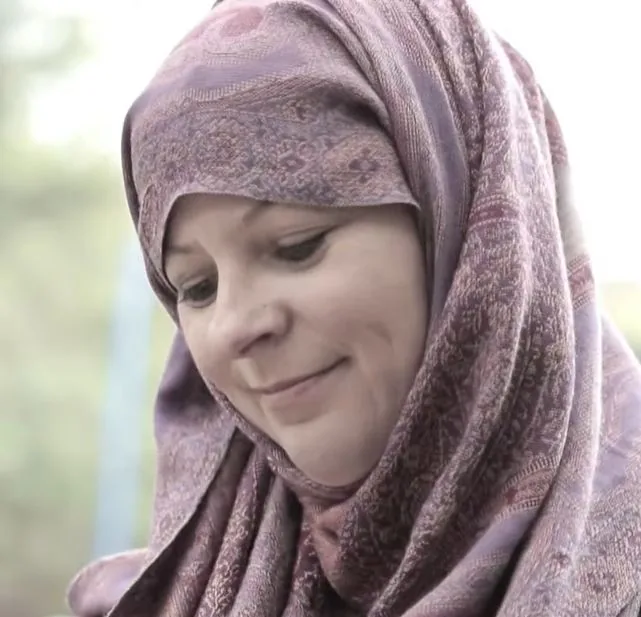
"As a non-Muslim, reporter, and journalist, I began to be touched by these clear expressions of the right way to behave. I was in Ramallah, on my very first visit to the West Bank, and I had no coat — long story — and I was cold. An old lady came and said, 'Come, come, come.' She brought me into her home. I couldn't believe this was happening, I couldn't believe it, in the twenty-first century. That's the kind of generosity we can and should give one another when we practice the teachings of the Holy Qur'an."
"And when I went into her house, what was in her house, Sheikh? Nothing. One room like this one, but empty: just walls, floor, ceiling, and a mat, and the iftar for ten people was laid out on the mat. And what was the iftar? A plastic plate of hummus, a plastic plate of bread, a plastic plate of salad. So when I sat down, I said, 'No, no, no, no, no.'"
"Wallahi, I tried not to eat this woman's food, Sheikh. I tried not to eat, but she kept giving it to me. She said, 'You are our guest,' and she gave me so much that she didn't accept a refusal."
"And I ate and I felt angry. I was angry at Islam. I was angry at a book that would tell people who are hungry to stay hungry for 30 days. I was angry at the Qur'an because it told this poor woman not to drink water when her water is always dirty. So I asked the mother, 'Why do you fast in Ramadan? Why? What is the purpose?' And she said to me, 'I fast in Ramadan to remember the poor. This mother who has nothing in this dunya, who may never have anything in her entire life, she was humbling her heart for others who had less.'"
"What is this? This woman who knew only hardship was emptying her stomach to thank God for having an empty stomach. What is this? And at that moment, I thought, Sheikh: 'If this is Islam, then I want to be Muslim!'"